Wednesday, 5 September 2012

Digression: Books I'm Reviewing—John Vigna's 'Bull Head'


   ...and while on the topic of Lives of Girls and Women, that book's epilogue features Del Jordan's recollection of her unlovable home town, and as far as the story is concerned it's the final glimpse and Del's closing thoughts. Amongst other things, the epilogue draws a distinction between Del as a young artist and the narrating Del who is, Munro implies, maturer and somehow a truer artist. She's looking back at the town where she was born and also at her younger, less knowing self.
   In limbo between finishing high school and beginning the rest of her life, Del plans to write a novel that's vengeful in the sense that she imagines converting Jubilee and its citizens into a gallery of grotesques. Her parting gift, then, will be to satirically pillory the very place whose values restricted and oppressed her.
   She doesn't write that book, of course. Munro suggests that young Del's motivations are suspect and petty, and that the book (had it been written) would have been deeply flawed because it sought to judge and condemn rather than explore and understand. 
    In a roundabout way, Munro seems to be presenting a moral/aesthetic preference in this epilogue, hinting that in her view (circa 1970) a better kind of art is produced when the artist lays aside hurts feelings or a desire to mock or ridicule those they feel frightened or hurt by.
   The model of realism Munro promotes here is of course merely one model for fiction. And while Del appears to champion it as the vision of artistic maturity and fullness (satire, comedy, and absurdism, then, become inferior literary modes since their principal goal is not a questing and all-encompassing representation of actuality), she's one character in one work of fiction, and so her philosophy of aesthetics and the tie to artistic integrity sit there on the page, intriguing ideas to consider.
  
∞

   Munro's model returned to mind last year when I read D.W. Wilson's Once You Break a Knuckle, in part because London-based Wilson's depiction of Invermere, his hometown, reminded me of the book the younger Del choose against writing. (Also, part of my personal distaste for the stories came from not appreciating the macho heterosexual white guys and what I perceived as the author's romantic valorising of their guns/trucks/fists/booze worldview; I grew up in small towns and saw enough of that brutality to understand the wisdom of fearing it.) More importantly, I felt like Wilson gave Invermere (its cultures, its people) short shrift: as a reader I wanted to learn about the breadth of the place being depicted, and with Knuckle it seemed that the author had narrowed his focus to a single kind of character at the expense of all others.

∞

   There are striking similarities between Knuckle and John Vigna's Bull Head, a collection of stories set in a remote British Columbia town not far from Invermere. Vigna also focusses on hard drinking heterosexual guys who are prone to fighting and struggling in their relationships with women (when they have them at all). Gun and trucks appear regularly too.
   And like Wilson, Vigna's view of his small town prefers to observe hard-luck men who hang out at a stripper bar or in taverns, shoot guns, quarrel, and so on.
   And after two or three such stories my personal response was, "Okay, enough with these guys. They're pathetic and uninteresting. What's happening in the rest of the town? Surely not everyone is an alcoholic, a stripper, or a prostitute? Isn't anyone happy? Where's the diversity of human experience and endeavour?"
   Although I understand and to a degree appreciate Vigna's aesthetic choice (just as I understand and appreciate—kinda, sorta—the numerous scions of the Vancouver School of photography who take picture after picture of ugly suburban tear downs, gaping pits from which condos will soon sprout, and concrete overpasses), as an urban reader with an interest in rural living I would have appreciated knowing/seeing more about the layers of the place and the kinds of people who live there (and their stories) rather than witnessing a single stratum of a masculine type whose limited options all seem to involve the same few choices.


 [The above is blog musing. The proper review appears in the Globe and Mail.
Pre-editor, the version I wrote began like this—

    Slightly over a 200km drive southeast from Invermere—an isolated settlement in which, according to the cautionary stories of D.W. Wilson’s Once You Break a Knuckle, the natural condition of mankind is still solitary, poor, nasty, and brutish (though not necessarily short)—stands Fernie (pop. 5,200), a coal mining town in BC’s Elk Valley that has lately gained favour for proximity to a ski resort.
    The eight stories of Bull Head, John Vigna’s debut collection, are set in a place roughly equivalent to Fernie. Like London-based Wilson, Vancouver resident Vigna’s country-noir vision of rural existence emphasizes dire violent bleakness. Here, apparently, opportunities are few and far between, happiness rarer than platinum (and quickly lost), and anesthetizing alcohol the widely swallowed poison of choice. Though there’s less manly rifle-firing and macho posturing in Vigna’s fictionalized Fernie, the town’s misery level suggests a twin separated at birth from Wilson’s Invermere. ]

Tuesday, 4 September 2012

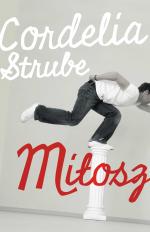
Digression: Books I'm Reviewing—Cordelia Strube's 'Milosz'


   Besides being as perfect as possible for a collection of linked short stories to be, Alice Munro's Lives of Girls and Women has proven terrific for lit classes because students relate well to Del Jordan's experiences and perspectives and because Munro's handles coming of age themes—identity, death, spirituality, sexuality, individuation—with such impressive, complex depth.
   Still, for some students the book reads as historical fiction since it (published in 1971) speaks of small town life fifty years before they were born.
   From their POV the period is so remote they may as well be reading Jane Austen. A contemporary coming of age novel (that works well in the classroom) has resulted in a number of one-offs for me: novels I thought incisive and engrossing (and criminally underappreciated: such as Lynn Crosbie's Dorothy L'Amour and R.M. Vaughan's Spells) overwhelmed students (too much violence, too much literariness, ao much negativity). While others, like Aryeh Lev Stollman's The Far Euphrates, Andre Alexis' Childhood, George Elliott Clarke's George and Rue, and Wayson Choy's The Jade Peony fit well in CanLit classes, the quest for a suitable contemporary pairing for Munro continued.

∞

   Lemon was Cordelia Strube's eighth novel, and I'd managed to altogether miss it and the previous seven (re: lots of books, not lots of time). The story of an articulate and bright high school student in contemporary Ontario, Strube's novel caught my eye one day while coming up with the course texts for a second-year CanLit class. Just past midpoint I put the novel down, halfheartedly promising to return to its depressing setting (I mean notably depressing for Canadian literature, and that's saying something). I could say I got busy with other projects, but the truth is I didn't really like it and felt that spending more time on its relentlessly grim outlook was less desirable than, say, going on a bike ride or caring for the aphid-plagued plants on my balcony.

∞

  For her latest novel, Strube takes apparent pleasure in flirting with comedy of the absurd as well as with romantic comedy. Its protagonist is a colossally failed everyman actor (it may be possible to read the novel without thinking of Dustin Hoffman early in Tootsie or Kevin Klein performing Death of a Salesman in Soapdish, but I found it a challenge) whose life generates mess on nearly every level. Strube never completely abandons her pessimistic views of humanity and historical progress, but the levity throughout infuses the story with a welcome lightness of touch and a sense that even though humanity and the earth are constantly sliding toward ruin, the movement isn't inevitable, not necessarily.


[My better composed review appears online in The Winnipeg Review.]

Friday, 10 August 2012

Digression: Books I'm Reviewing—Titles for Early Autumn


   August, reputedly home of the year's diēs caniculārēs (a concept that may not apply to Vancouver this remarkably cloudy 2012) and the natural time for tremendous lassitude or flat out laziness, also means prep for the new semester. I just finished Alissa York's Fauna for a fall CanLit class, and am happy to have encountered a terrific novel I missed when it was first published a couple years back. 
   As a result, blog activity will be pretty stagnant here for the next few weeks. Between prep, my own writing (ha!), and weekend trips of camping and recreation, coming up with material for here seems about as appealing as repainting my living room.
   And for September I have a short stack of new publications I'll be reviewing: Zadie Smith's NW, Candace Savage's A Geography of Blood, John Vigna's Bull Head, Tamas Dobozy's Siege 13, and Cordelia Strube's Milosz.


Wednesday, 25 July 2012

Fiction Installment #30: (Part II, Ch 4, Jake) "Grunt Work"


   Jake picked up the phone and dialed Nicos once he and Lora brought their schedules into synch. He watched his assistant’s bustling stride toward the frontmost desk.
   After the morning’s first outburst—“C’mon, Jake. This is going to be an ordeal, and you know it”—she’d been puffed up and radiating annoyance. Wise with experience, Jake and Chaz hung back as Lora spent her energy on drop-ins, whose questions were met by a cyclonic fury. Earlier, Jake had pointed out the necessity of striking the morning’s appointments: no, he wouldn’t put off the tour any longer, and no, he wasn’t being superstitious. The location inspection—the physical walk-through of both camera-ready sites—demanded full attention. Now, not later. He’d scrolled through plenty of site photos and renderings, but like porn the images were a passable substitute only when the real material wasn’t within grasp.
   Though stomping around on site and kicking the proverbial wheels was reassuringly physical, it was also smart: a slim volume of gut-souring moments in Jake’s career had hammered home the fact that each level in the hierarchy of delegated activities called movie-making was a fuck-up in the works. The unambiguous instruction—“Find a cliff-side crash site and build a partially buried spacecraft there”—might seem like a no-brainer, but between the executive mouth from high above and a crew ear a few notches below, everyday air currents sheltered anarchic long-chain molecules of Murphy’s Law whose very essence guaranteed sound wave distortions. The cliff might not measure up, the crash scene look too this, not enough that, or the alien craft put together somehow wrong—it wasn’t difficult to mangle proportion, colour, shape, or style. Jake’s concern was with when and where, not if the fatal failure of communication would occur.
   There was no production—not anywhere in all of a century of history—in which an idiotic decision had not hobbled easy progress. Jake would wager a month’s salary on that. Things going sideways was as much a fundamental of moviemaking as water cooler small talk was to office towers. Virtually every veteran accepted that as the nature of the beast and grew cautious—the philosophical crux: Watch your ass—in order to stave off the sort of disastrous miscalculation that stole time and money from the demanding string-pullers who signed pay cheques.
   Jake had witnessed the results of even one wrong step and understood the consequence: having your professional competence questioned was the first sure razor cut of career suicide. Six months or so later you’d be telling anyone in earshot that you’d “had it with the game” while handing out freshly printed business card—Certified Real Estate Agent—and throwing catch-phrases like “seller’s market,” “no better time than now,” and “investment in your future” with a televangelist’s wheedling intimacy and undercurrent of desperate threat.
    “Hey Nicos,” Jake said. “Yeah, I’m settled. The place? Fine, no complaints. Good views and quiet. Comfy bed. Where are you? Where’s that? Okay, how close?” He held the receiver away to muffle Nicos’ barked instructions.
    “For sure, fifteen minutes is fine,” Jake said, “Finish your breakfast and then haul ass. Don’t bother with parking, I’ll come out when I see you there. Yeah, yeah, I know, just honk if you don’t see me.”
    “Where’s the crash site, by the way? Close to the Swinburne compound?” Jake leaned forward to study the map on the desk. “Right, what’s that? Hold on a sec, I’m looking. Never mind, the address means nothing to me. Christ, it’s like varicose veins. There’s a million half-assed roads around this town, God knows why. That location might as well be Timbuktu.”
    The urge to crumple the map into a tight insignificant ball flashed like anger, but Jake let it pass. He’d always despised last-picked-for-the-team scenarios and avoided involvement in practically anything—golf, tennis, karaoke, poker—that he could not master: there was no point in showing up if he didn’t have a hefty chance of dominance. Love of the game was bullshit.
    Map reading, a subset of sense of direction, was another item he could add to a steer-clear-of-it list. It embarrassed him to realize that in a dire situation—being lost in the wild during winter with no food or matches, vultures circling, and a supreme urgency to find a way home—he’d be a lousy person to get paired with: trudging forward with gung-ho bravado, he’d be convinced he was the top dog walking a straight line due south toward warm safety when a lazy spiral culminating in hypothermia and birds feasting was the geometric truth.
   And Nicos, Mr. Know It All, was salt in the wound. He possessed senses on par with one of those mystifying dogs that shows up at a distraught family’s front door an entire year after being forgotten at a camp site one thousand miles distant. Jake could see no advantage to disclosing that information. He’d let Nicos lead the way because that was part of a LM’s job description, an obligation reflecting nothing except a lesser rank on the totem.
   “Anyway, Swinburne’s compound for a walk-through, then the crash site. See you in fifteen,” Jake said, eager to stop Nicos from speaking; he’d hear plenty from the motormouth inside the cab of the pickup.
    “Right, I’m sure it is,” Jake said. Nicos was griping about a rubbery breakfast omelette, the result no doubt of inferior Canadian chickens, eggs, or kitchen talent. “Let’s keep it at fifteen anyway. I have a few loose ends here."

[Part 1 of 6, "Grunt Work" ]


Monday, 16 July 2012

Non-Fiction Sidebar: Mots Trouvés


   "A critic is only a disgruntled self righteous punk who can't get a real job."
                                                        —Posted by: R | 07/16/2012 at 09:29 PM
   
   [Found online. Part of a comment thread replying to a news non-item about death threats an online blogger/film critic received after giving The Dark Knight Rises a middling review.]


   It's easy to imagine a wall of ancient Pompeian graffiti expressing much the same sentiment...


Friday, 13 July 2012

Fiction Installment #29: (Part II, Ch 3, Marta) "In the Midst of the Incomprehensible"


   “Okay, Marta. Let’s get to it,” Lora said, striding toward the dimly lit rear of the building. “We’ve got a situation, kind of a good news/bad news scenario. Well, sort of. Coffee?”
   “I’m fine, thank you,” Marta replied. “Chaz made me a cup for the drive.”
    “He’s such a peach,” Lora said, “a sweaty one, though, you have to admit.”
    “A situation?”
    Lora didn’t answer as she corralled Marta forward.
   The back office was empty except for remnants, a stout oak desk and two folding chairs. Jake, typing at an aluminum laptop as they entered, did not look up. Marta imagined Joan in the room decades earlier, noisily firing off letters on an indestructible Royal and smoking furiously as she gossiped with the floor manager about the lives of the clientele, homespun farm wives with callused hands to whom she peddled—on affordable layaway, naturally—modern visions of city sophistication and ease.
   Lora cleared her throat until Jake stopped. “We’re good to go, boss. You remember Marta, yes?”
Behind the desk, Jake continued reading the screen. He’s slouched and will be monotone, Marta thought, like back-of-classroom students. Jake focussed on the computer screen intently, as though to communicate I’ve got better places to be.
   Lora knocked on the desktop. “Yoo hoo, Jake?” 
   Jake offered Marta a confident automatic smile. “Sure thing, we’re good.” Leaning back and clasping the back of his neck, Jake flexed round biceps. “You’re settled okay, Professor?” he asked. “Everything in order?”
   The clipped delivery encouraged a military reply. Marta thought to say “Yes, Sir,” but wasn’t comfortable joking with a man she’d scarcely met. “Everything’s fine, thank you. It’s Marta, please.”
   “Alright then, we’ll start with the good news,” Lora said, pacing the room like a zoo animal, one newly captive and wild-eyed rather than sleepily domesticated. “The next while can be a surprise holiday for you, all expenses paid. Surprise!”
    “Accommodation and per diem plus the weekly salary,” Jake said.
    “What’s the bad news, then?”
    “The Prophet of Djoun has done a 180,” Jake said. “Major change of plans, it’s deep-sixed now.”
    “Keyword: it’s been re-purposed,” Lora added. “There’s a new buyer and a new concept. The script’s been revamped.” By now Lora had settled at the desk’s corner.
    “The nature of the beast,” Jake said distractedly, eyes flitting to the screen.
    “Oh.” Ignorant of production company deal-making, Marta awaited further explanation.
    “Basically, it’s a matter of economics,” Jake said. “But there was already money allocated for your consultancy, so it’s still yours. The contract had been signed, et cetera. Legally you’re entitled and we’re obligated.” He snapped shut the laptop.
    “I don’t understand,” Marta said, disliking her new status as a technicality and a legal obligation. “I’m entitled to what?”
    “We’ll give you the Reader’s Digest version,” Lora said.
    “Network A backed out of their commitment, so The Prophet of Djoun went bye bye.” Marta watched Lora wave and wondered why she believed that pantomiming the situation would help clarify the ambiguity. “‘We’re over-committed’ they said, and needed to lower overhead. ‘These uncertain times’ and ‘Return on investment,’ and so on. The usual business doublespeak, but the gist is they backed out at the eleventh hour and put the kibosh on the whole deal. If I had a dime for every lying wanker in the movie industry…Christ, men and their cold feet.”
    “Keep your eye on the track, Lora,” Jake said.
    Marta’s confusion was not abating. “So, the movie isn’t going to be made?” Since they were sitting in Joan’s and holding a meeting while on location, Marta assumed that scenario was remote: what imbecile would demand a disrupted schedule and hours of driving from the coast only to have her turn around, fat cheque in hand?
    “Not exactly. That movie isn’t going to be made. Prophet is out, Battle is in,” Jake said.
    “Battle…?” Marta said, resentment rising. How long would it have taken to email an update? And couriering another script wouldn’t have broken the bank. They forgot about me, obviously, she thought.
   “Network B was sold on a different vision, you see,” Lora said. “Scripts are wet clay, basically. They’re easy to shape. A bowl becomes a vase in no time and it might become a bowl again by the end of the week. Or a cup. Poof, like magic! And we deliver what the buyer demands. They say, ‘No cup now, we need a plate’ and we know what to do. Demand and supply.” Lora’s words and pottery class motions were easy to follow, but Marta wanted to hear elucidation without weird digressions or geared-to-children analogies complete with Theatre 101 hand gestures.
    “Enter The Battle for Djoun. That’s just the working title. Lady Hester Stanhope is gone, but now there’s Lady Harriet Swinburne, a strong independent woman that’s similar. Likewise, the other characters have been changed a bit and renamed. Again, it’s a legal thing,” Jake said. Marta learning the otherwise indifferent man paid close heed to the letter of the law.
   “The Stanhope woman has living relatives in England, or somewhere, so there’s concern about character assassination and defamation, or buying permission, or some damned thing, if you can you believe it,” Lora said from the desk perch. “Question: She’s been dead for, like, ever, right?”
   “Yes, since the summer of 1839,” Marta said.
    “So, there’s another character, one based on Lady Stanhope?” Marta thought vaguely about libel laws and the term “Inspired by True Events” that often appeared in film promotions.
    “You got it. Lady Swinburne has the same back story,” Jake said. “She’s strong and outspoken and left England rather than face the hypocrisy. She doesn’t put up with other people’s crap, basically.”
    “Basically,” Marta said.
   “She’s a sexy alpha-female, an Amazon, tough as nails, Lara Croft meets a young Queen Elizabeth I with a touch of Amelia Earhart. And she set up a commune in a hostile foreign territory and was renowned, and all that,” Lora explained.
   “But Network B was sold on a script that’s more action-oriented than the original biopic,” Jake said.
   “Action-oriented,” Marta said, annoyed by her own parroting.
   “That right, honey. It’s re-genrification,” Lora added. “Happens all the time, the law of commerce, as old as Adam Smith.”
   “All the time, you’d be amazed,” Jake confirmed.
    “Action? Like Transformers?” Marta asked. “Or Saving Private Ryan?”
    “Yeah, exactly,” Lora said, “or maybe Aliens.”
   “The epic battle between good and evil, it’s classic, old as the hills,” Jake said in explanation of the revised thematic content. “But no robots.”
    “Robots?” Marta said. “Really? I don’t see how...”
    “The new script will explain everything,” Lora said. “Trust us.”
    “Anyhow, we’re not quite so concerned with historical accuracy now. The viewers aren’t going to quibble about things like that. The network’s demographic is teenaged boys, basically,” Jake said. “And men that act like them. As far as they’re concerned anything before Playstation is a long boring stretch of prehistory.”
    Who act like them, Marta silently corrected.
   “Precisely. These guys are stunted, nerdy dweebs that play with gadgets while they watch TV and drink 6-packs of Coke and still get hot watching Xena reruns. Ancient Rome, Medieval England, World War I, it’s all the same. Their primitive brains register gore, action sequences and flashes of T and A, not whether Lady So and So would say or do such and such in 1829 or whenever. Did I mention gore? Exploding bags of blood, decapitation, that kind of thing. I should know, I live with two of them, teenaged version,” Lora exclaimed. “They’re rude little monkeys....”
   “The track, Lora, the track,” Jake said. Marta could see their variation on good cop/bad cop had developed organically.
    “Right. The long and the short of it is that viewers are the bread and butter of the network and those viewers want action sequences and D-cup video game vixens and don’t give a fig about much else,” Lora said. “Hester Stanhope’s speech-making would lull them into comas. They’d switch channels in a heartbeat, so the plan is that Lady Swinburne’s kick-ass battle royales will flick some caveman switch in their thick heads.”
    “Exactly,” Jake said, flexing. “And we’re here to deliver the product they expect.” Marta read the yellow LIVESTRONG wrist band and the tattoo beneath the dense clipped forearm hair: there, for onlookers, a high-rise of letters spelled “Fortune Favors the Bold.” Comportment, she thought, a fusty principle. And faintly ridiculous too, like white man’s burden.
   “We’ll give you the latest script now, Marta. Take the day off. Look at it and think about what you want to do. Like I said, we’ve got a shit load of work to get done today, so we have to cut this meeting short,” Lora said, holding up the cellphone to show Marta the day’s schedule, blocks of different colours in a time line.
    “Alright,” Marta said. She wanted extra minutes for interrogation, but Lora had made it plain that the moment was not propitious.
    “If the vacation idea doesn’t cut it, you can check out and head home,” Jake said. “It’s a good deal either way. Free money.”
    “We’d prefer that you’re nearby, just in case,” Lora said.
    “Just in case,” Marta asked.
    “Well, you know.” Marta had no idea.
    “You look a bit dazed, hon,” Lora said. “This business is crazy.”
    “I’ll check in later,” Marta said as she turned for the door.


Friday, 29 June 2012

Non-Fiction Sidebar: A Special-Needs Ethics for Book Review Writing?


   On any given week I read scores of reviews. Music at Pitchfork; films, TV programs, and still more music via Metacritic; gadgets on Engadget, CNET, and Appleinsider; even fashion collections at Style.com (where Tim Blanks recently discerned in Prada's S/S '13 collection an unholy disaster of stripped-down androgyny).
   Collectively, these sites represent a volcanic eruption of heterogeneous opinion, bias, judgement, seemingly careful evaluation, and seemingly vindictive diatribe—a brutal review of X by one reviewer will receive a Meh by another and an interesting-but-flawed C+ by yet another. The sheer diversity of subjectivity is remarkable.
   One commonality between them, though, is the complete lack of agonized, should-we-or-shouldn't-we? introspection about the ethics writing of a review, an issue brought up today by Michael Lista, who was both championing his own stance about the necessity and value of writing hostile reviews and criticizing Jan Zwicky's 2003 defense of her policy of positive-only literary reviews, originally published in The Malahat Review.
   Simply put, Zwicky believes—or did nine years ago—that a collective silence about a bad literary work is sufficient criticism from the community, that ever-shrinking review space should be reserved for books about which the reviewer has friendly enthusiasm, and that "the artist’s position, I believe, must still be construed as one of trust, one that requires of reviewers respect for the thin skin that is essential to creativity."
   Lista, meanwhile, mocks Zwicky's logic and perceived sentimentality while asserting the following tough-love sermon:
   "The purpose of a review, good or bad, is to begin a conversation, not to end it. And when we write a negative review, we’re writing it about an adult, a professional, who of her own volition chose to publish poems, to share them with other human beings who have that pesky, intractable habit of thinking for themselves. No one is forcing these people, we who are too many, to publish; if you’re squeamish, put your poems in a goddamn drawer. And if you can’t stomach the occasional reader disclosing that she doesn’t like your poems, well: There’s always law school."

∞

    Because I've read so many articles and blog posting about the ethics of book reviewing, and since no one mentions Michael Bay's thin skin or hurt feelings when yet one more dismissal is published upon the release of another of his Transformers blockbusters, and because nobody apparently publishes a thoughtful essay proclaiming that magazines should publish nothing but favourable reviews of stereos or automobiles or architecture (and that the pall of silence about poorly designed products will be sufficient information for consumers and adequate criticism for manufacturers), I'm left wondering about the categorical specialness of writers.
   Are they—hmm, I am writing, after all—are we so different from musicians, or filmmakers, or clothing designers that, like an endangered species or someone with a handicap, we require kid gloves management and special dispensations? And are our sensibilities so refined and our talents so orchid delicate that they need both constant protection and unending care?
   That latter question raises a different but not altogether unrelated phenomenon: bubble wrap kids and helicopter parenting. My understanding is that overprotective parenting is widely regarded as stunting, insofar is its protective ethos limits exposure to a real world in which any child (regardless of her diet of praise) must eventually become a participant.
   I'm not sure the analogy is an exact fit, but it seems that as a solution to a problem, habitual and legislated niceness complemented with a complete avoidance of slings and arrows is tantamount to a delusion.